
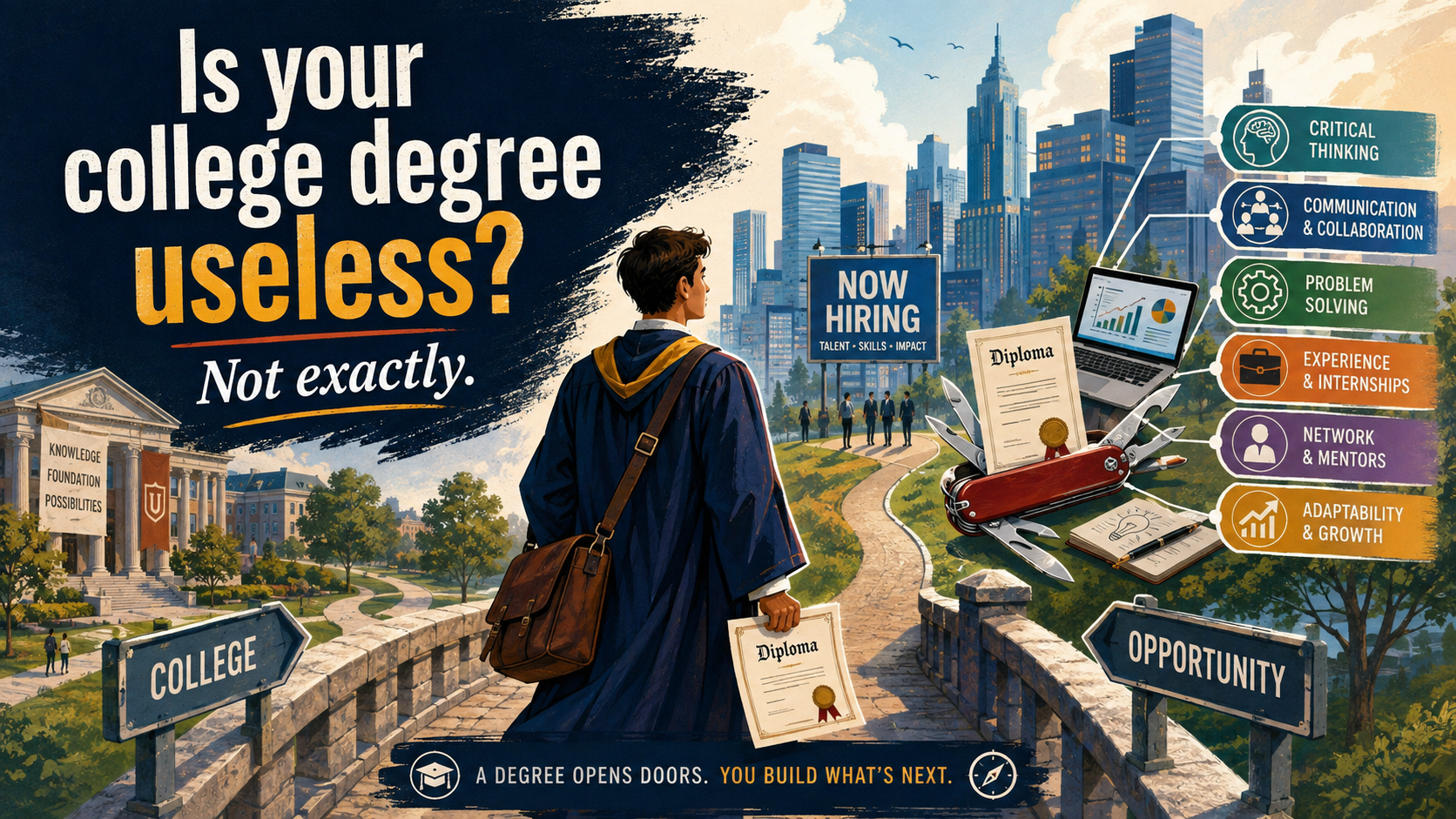
The degree is not useless. It is just not a complete hiring strategy.
Every few months, somebody announces that college is dead. The tuition numbers are obscene, the job postings want three years of experience for an entry-level role, and a graduate with a fresh diploma is staring at a hiring manager who would really prefer someone who has already done the job somewhere else.
That frustration is real. But “useless” is doing too much work in the sentence.
A degree can still give you a foundation: a way to learn difficult material, finish long projects, write clearly, work with people who do not think like you, and keep going when the assignment is not especially thrilling. Those are not small things. Employers need them. The problem is that a diploma by itself does not make those abilities visible.
Hiring managers are not buying your transcript. They are trying to reduce risk. They want evidence that you can solve a problem, communicate with adults, learn a system, and deliver something useful before the deadline becomes a small fire.
That is why the degree needs company.
Build a portfolio, even if your field does not call it a portfolio. Save the research project that required actual thinking. Document the internship where you improved a process. Turn a class assignment into a short case study: here was the problem, here is what I did, here is what changed. If you do not have paid experience yet, volunteer for work where the result can be measured. A nonprofit, a student organization, a local business, or a community project can all give you something more persuasive than “completed coursework.”
Then learn to talk about the work without hiding behind the degree. “I have a communications degree” is a fact. “I organized a campaign, interviewed the audience, rewrote the message, and increased event signups” is a reason to call you back.
The same goes for the skills employers keep naming: critical thinking, communication, problem-solving, adaptability, collaboration, and the ability to learn. Those words are not magic spells. They become useful when you attach them to a specific example. Do not tell someone you are adaptable. Tell them about the time the plan failed, what you changed, and what happened next.
A degree opens doors. It does not walk through them for you. That part is annoying, but it is also good news. You are not limited to the label on the diploma. You can keep building proof, relationships, experience, and a body of work that makes the next employer see more than a line on a résumé.
The market is broken. You are not.™ Start with what you have, then make it impossible to miss what you can do.